Like many British colonies, New York experienced recurring tensions between royal governors and elected assemblies. Questions of taxation, military expenditures, land policy, and political authority frequently generated conflict.
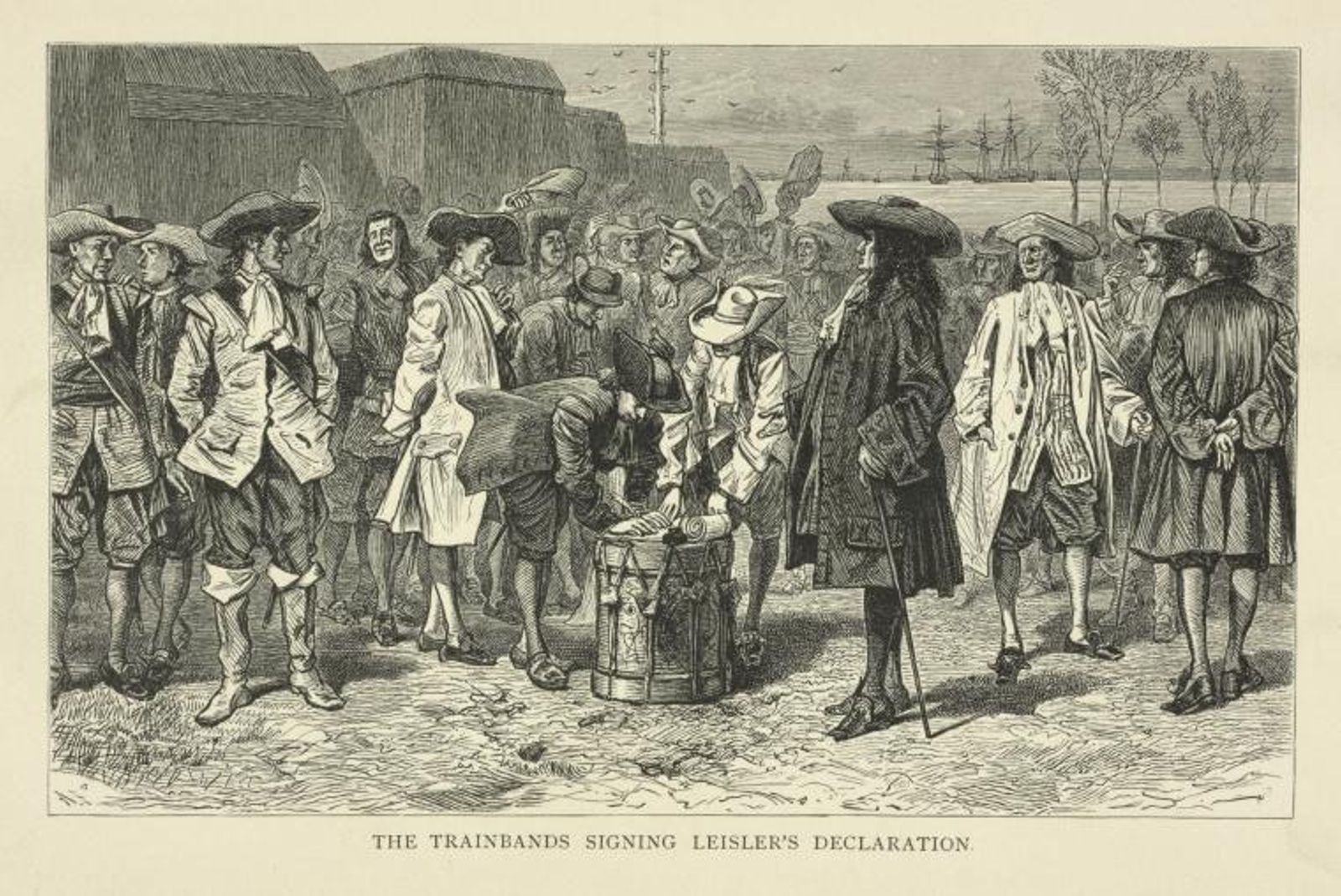
The colony’s most dramatic political crisis followed England’s Glorious Revolution of 1688. Amid uncertainty over political authority, merchant and militia leader Jacob Leisler seized control of New York in 1689.
To supporters, Leisler defended Protestant liberties and protected the colony against arbitrary government. To opponents, he represented dangerous political radicalism and unlawful rebellion. When royal authority was restored, Leisler was arrested, tried, and executed.
The controversy surrounding Leisler’s Rebellion divided New Yorkers for decades. More importantly, it revealed a growing willingness among colonists to participate directly in political affairs and foreshadowed later disputes over authority and representation.
By the eighteenth century, New Yorkers had developed a strong attachment to representative institutions. Elections, legislative debates, petitions, and public meetings became familiar features of political life. Although royal governors retained significant authority, they increasingly encountered colonists prepared to defend what they regarded as their traditional rights and privileges.