By the eighteenth century, New York had become more than a center of trade and diplomacy. It was also emerging as one of the foremost intellectual and cultural capitals of British North America. Newspapers circulated widely, books and pamphlets arrived from Europe and other colonies, and coffeehouses, taverns, and churches became places where public affairs were debated with increasing vigor.
As commerce expanded, so too did literacy and public engagement. Merchants, lawyers, clergy, and artisans participated in a growing culture of discussion that connected New York to the wider Atlantic world. Ideas about government, liberty, religion, commerce, and science moved through the colony alongside goods and people.
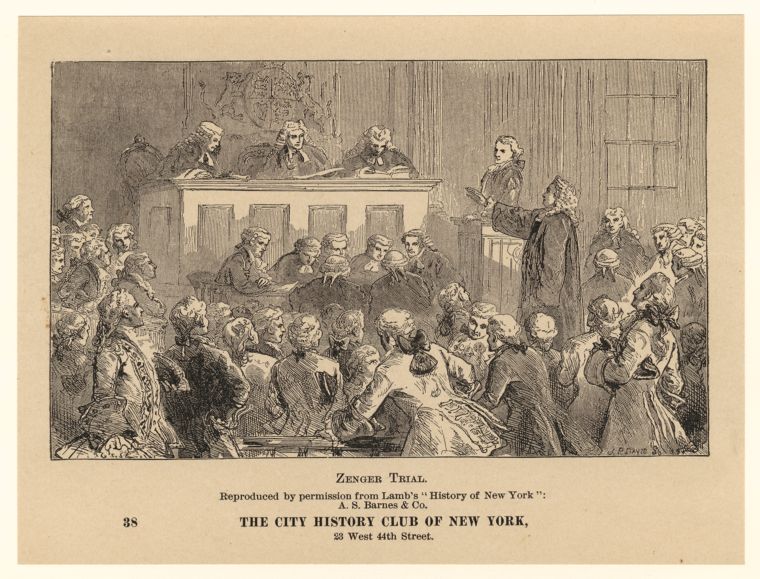
One of the most celebrated episodes in colonial New York occurred in 1735, when printer John Peter Zenger was tried for publishing criticisms of the royal governor. The case arose from political disputes within the colony, but its implications extended far beyond New York.
Although the legal principles involved were still evolving, Zenger’s acquittal became an enduring symbol of the importance of a free press and the right to challenge governmental authority. The trial helped establish New York as a center of political discussion and public debate and later assumed an honored place in the American tradition of freedom of expression.