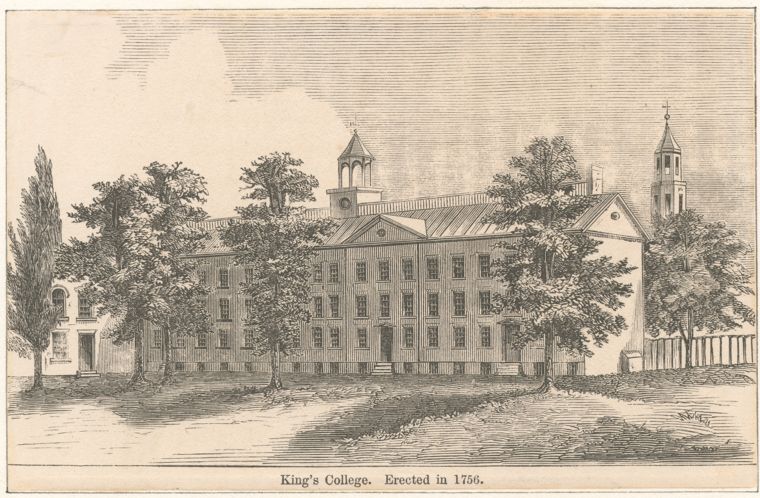
The colony became an important center of higher education. In 1754, King’s College—later Columbia University—was founded in New York City. The institution reflected the colony’s growing wealth and cultural sophistication and would become one of the leading educational centers in British North America.
New York’s intellectual life extended beyond King’s College. Scientific inquiry, private libraries, literary clubs, and learned correspondence connected colonial New Yorkers to the broader currents of the Enlightenment. Merchants, clergy, physicians, lawyers, and public officials participated in an expanding Atlantic world of ideas, while newspapers and pamphlets helped create an increasingly informed public. By the eve of the Revolution, New York had become not only a commercial center but also a center of intellectual and cultural exchange.
The same forces that produced merchants, diplomats, and political leaders also fostered intellectual inquiry and artistic expression. By the middle of the eighteenth century, New York possessed a mature public culture whose institutions would help shape the revolutionary generation.