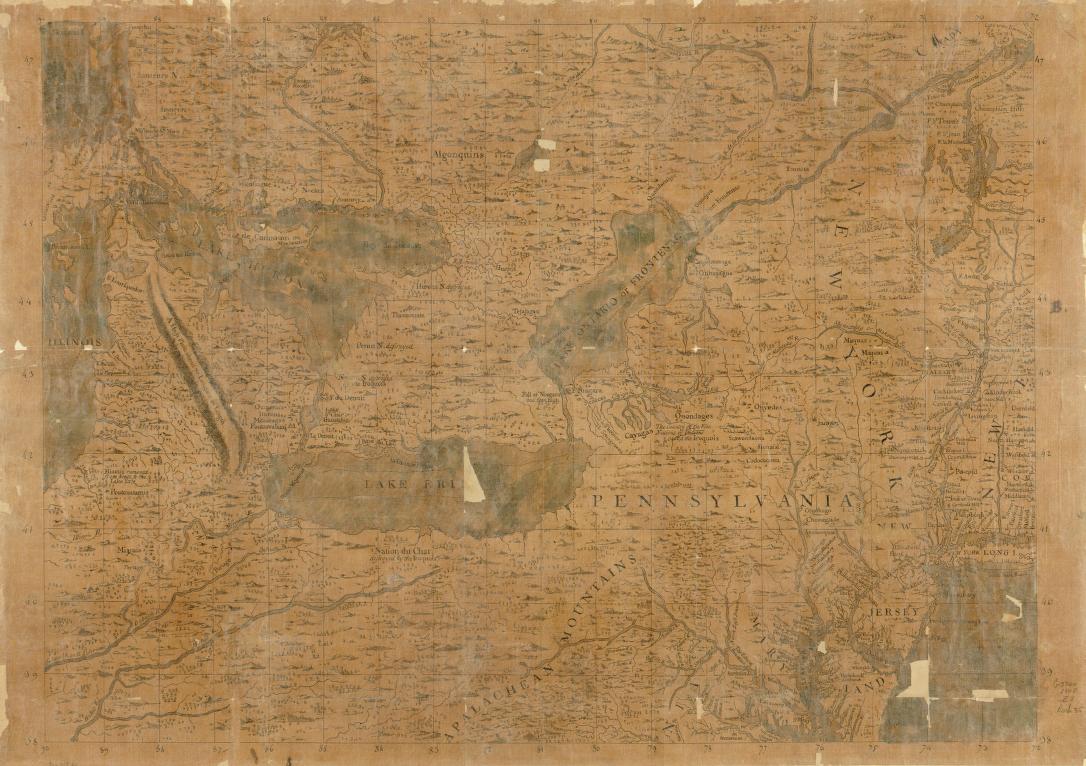
Throughout the colonial era, New York stood at the center of the struggle among European empires for control of North America. Its strategic position between New France and the British colonies, combined with its relationships with the Haudenosaunee Confederacy, ensured that military conflict repeatedly touched the colony.
During King William’s War (1689–1697), the North American phase of the War of the League of Augsburg, frontier communities faced raids and disruption as Britain and France competed for influence. The conflict revealed the vulnerability of New York’s northern frontier and underscored the importance of alliances with Native nations.
Queen Anne’s War (1702–1713), the American theater of the War of the Spanish Succession, again placed New York on the front lines. Military expeditions moved through the Hudson and Champlain corridors, while colonial leaders worked to preserve the alliance with the Haudenosaunee Confederacy. The war reinforced Albany’s importance as both a military and diplomatic center.
Sources
Wikipedia. "King William's War." https://en.wikipedia.org/wiki/King_William%27s_War.
Wikipedia. "Queen Anne's War." https://en.wikipedia.org/wiki/Queen_Anne%27s_War.
Waller, George M. "New York's Role in Queen Anne's War, 1702–1713." New York History 33.1 (1952): 40–53.
Further Reading
Chet, Guy. Conquering the American Wilderness: The Triumph of European Warfare in the Colonial Northeast. University of Massachusetts Press, 2003.
Laramie, Michael. Queen Anne's War: The Second Contest for North America, 1702-1713. Westholme Publishing, 2021.
Marquis, Samuel. Empire and Frontier: Colonel Peter Schuyler and the Valiant Iroquois in King William's War, 1689-1701. Pegasus Books, 2026.