Throughout the colonial period, Albany occupied a unique position at the intersection of Native diplomacy, imperial rivalry, and colonial politics. No other community in British North America played a more important role in maintaining relations between colonial governments and the Haudenosaunee Confederacy.
For colonial officials, diplomacy with the Haudenosaunee was not a peripheral concern but a central element of imperial strategy. Alliances with the Confederacy helped shape the balance of power among Britain, France, and Native nations throughout northeastern North America.
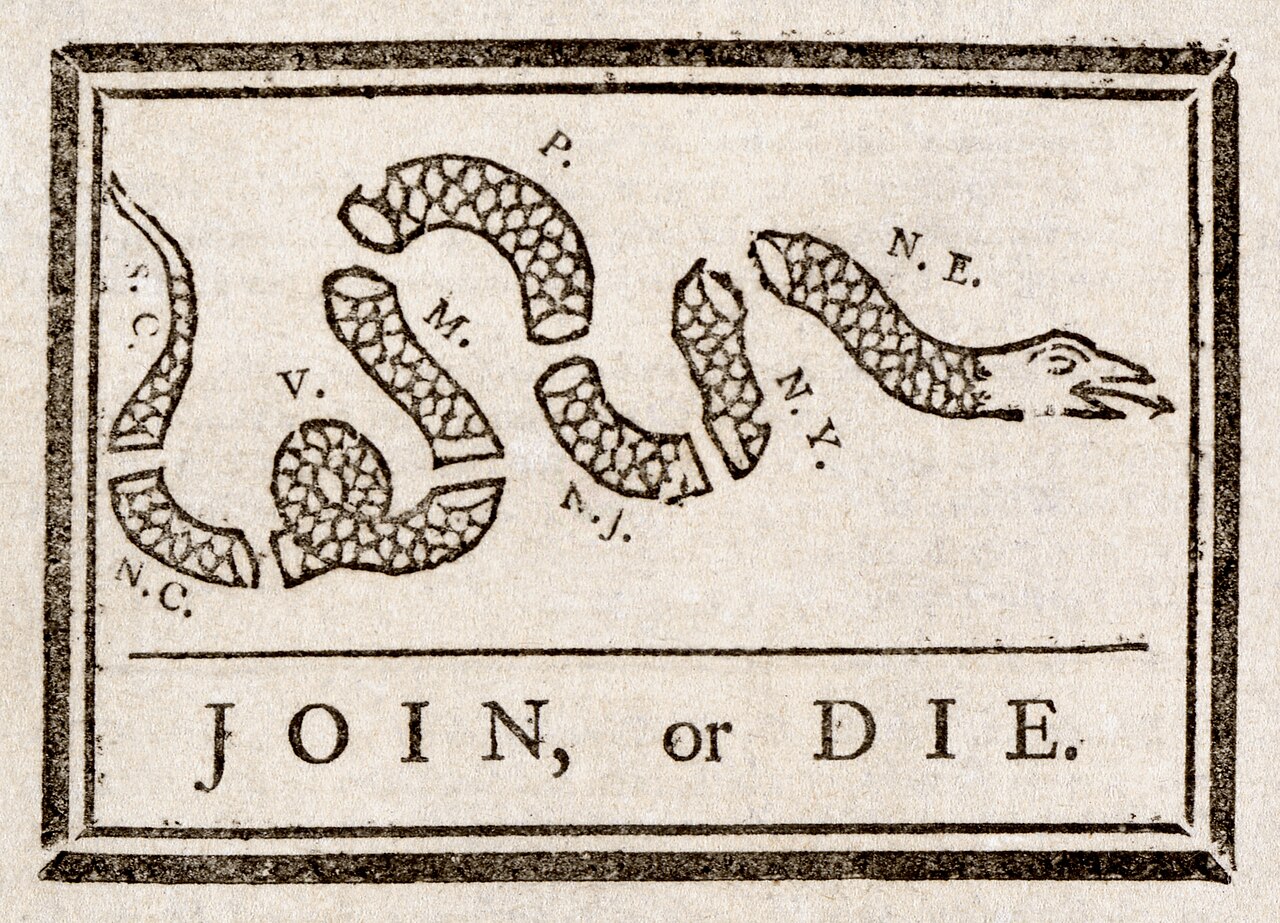
In 1754, representatives from seven British colonies gathered in Albany to discuss common defense and relations with the Haudenosaunee Confederacy. The Albany Congress reflected both New York’s strategic importance and the continuing influence of the Confederacy in imperial affairs.
Among the delegates was Benjamin Franklin, who proposed the Albany Plan of Union, one of the earliest schemes for coordinated colonial government. Although the plan was never adopted, it foreshadowed later efforts at intercolonial cooperation and ultimately the movement toward American union.
The Congress also underscored a larger reality: throughout much of the colonial period, Native nations were not simply subjects of European diplomacy but also active participants in it. The Haudenosaunee Confederacy exercised significant influence over relations among Britain, France, and the colonies and remained one of the most important political forces in northeastern North America.
Sources
Wikipedia. "Albany Congress." https://en.wikipedia.org/wiki/Albany_Congress.
Office of the Historian, US Department of State. "Albany Plan of Union, 1754." https://history.state.gov/milestones/1750-1775/albany-plan.
National Archives. "Proceedings of the Albany Congress, 19 June 1754 - 11 July 1754." https://founders.archives.gov/documents/Franklin/01-05-02-0096.
Further Reading
Shannon, Timothy. Indians and Colonists at the Crossroads of Empire: The Albany Congress of 1754. Cornell University Press, 2000.
White, Richard. The Middle Ground: Indians, Empires, and Republics in the Great Lakes Region, 1650-1815. Cambridge University Press, 1991.