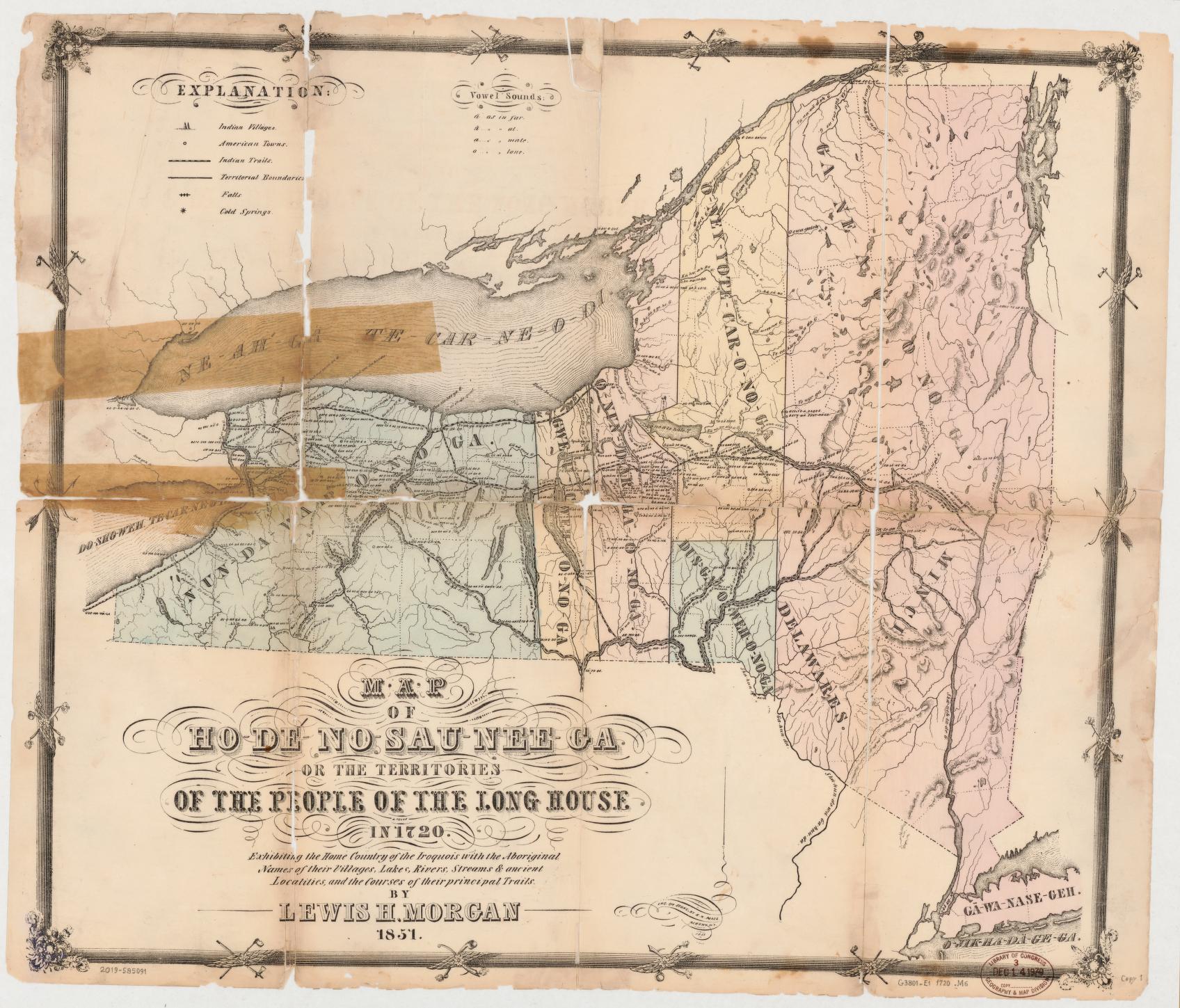
In the centuries before Europeans arrived, the region was home to numerous Indigenous nations. Most influential was the Haudenosaunee, or Iroquois, Confederacy, a powerful alliance of the Mohawk, Oneida, Onondaga, Cayuga, and Seneca nations, later joined by the Tuscarora. The Confederacy is increasingly referred to today by its own name, Haudenosaunee, meaning “People of the Longhouse,” although the term Iroquois remains familiar in historical literature. The Confederacy created one of the most durable and sophisticated political alliances in North American history, predating European settlement and exerting influence across much of the Northeast.
The fur trade became the foundation of New Netherland’s economy. Dutch traders exchanged European goods for beaver pelts obtained through Indigenous trade networks that extended deep into the interior. Fort Orange emerged as the principal center of this commerce, linking Atlantic markets with Native trading routes stretching toward the Great Lakes and beyond.
Native peoples were never passive participants in this system. They were diplomats, military allies, traders, and political strategists whose decisions shaped the colony’s future. The Haudenosaunee Confederacy skillfully balanced relations with competing European powers and maintained its influence for generations.
The strategic importance of Albany derived largely from these relationships. As the principal northern settlement of New Netherland, it became a meeting ground where Native leaders, traders, and colonial officials negotiated alliances, exchanged goods, and shaped the future of the region. The success of New Netherland depended as much upon diplomacy as commerce.